Samarkand: UN Special Rapporteurs express concern over demolition of houses and reconstruction in UNESCO zone
01.09.2025
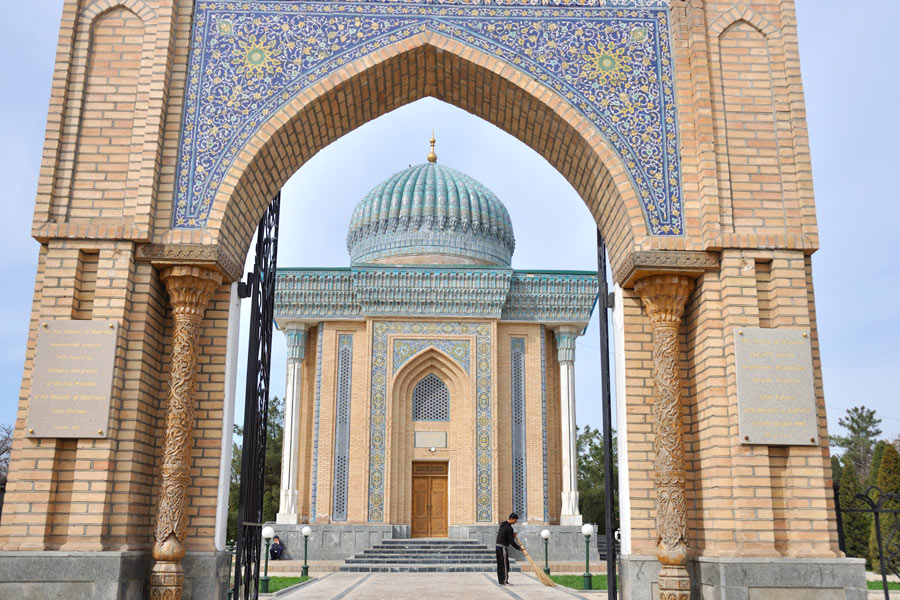
Three UN Special Rapporteurs – Balakrishnan Rajagopal , SR on adequate housing as a component of the right to an adequate standard of living, and on the right to non-discrimination in this context , Alexandra Xanthaki, SR in the field of cultural rights , and Nicolas Levrat , SR on minority issues – addressed their concerns to the Uzbek government about forced evictions, expropriations and home demolitions in Samarkand in an area protected under the UNESCO World Heritage, adjacent to the Abu Mansur al-Maturidi mausoleum and the Chokardiza cemetery :
The housing demolitions affect 220 residential and non-residential buildings in the area and 5 further residential and non-residential buildings in the Dahbed settlement of Akdaryadistrict, mainly inhabited by members of the Multoni or Mughat Roma community, as well as of the Tajik minorities.
This communication was sent in follow-up to the visit of the Special Rapporteur on the right to adequate housing to Uzbekistan (A/HRC/58/50/Add.1) in August 2024 and to an earlier communication concerning forced evictions in Samarkand (UZB 3/2019 from 9 August 2019).
This communication was sent on June 30, 2025, with a 60-day deadline for a response from the Uzbek authorities. On August 28, it was published on the website of the Office of the United Nations High Commissioner for Human Rights (OHCHR).
[beginning of quote]
According to information received:
Background
The forced evictions and housing demolitions shall enable an urban development project aimed at constructing a pilgrimage centre, a large 1,500 seat mosque and a parking lot in the UNESCO World Heritage zone of Samarkand. The affected neighbourhood is historically inhabited by the Multoni community, a disadvantaged Mugat/Roma community whose members are overwhelmingly illiterate and at risk of social exclusion, and as well by the Tajiks, an ethnic minority. The Multoni community is inherently connected to this particular quarter and the Siyob bazaar since 1915-1920. They have their own cemetery at the location, their own ceremonies and traditions. They usually have large families with 3-6 children; several families often constitute one household.
The majority of the Roma community members cannot read and write and thus face significant barriers to claim their rights. There are also concerns about the schooling of their children, when a school building, allegedly nonfunctional, was auctioned to a private person to build a hotel. Owing to predominant social stigma against the Multoni community, they live overwhelmingly segregated from other Uzbek citizens. In addition, many of the Multoni community members appear not to have any documentation of ownership over their homes or land rights for the plots on which their reside since many decades. While some members of the community have formal work or are self-employed, many depend on informal work, including street vending or street cleaning.
In 2009, a study reported that 2,065 Multoni/Mugats inhabited the quarter, but the number of residents may have significantly increased since then. It can be estimate that the planned and already carried out demolitions will affect above 1.500 residents. The exact number of project-affected residents is not known, nor more detailed information about their socio-demographic composition and their livelihoods, as authorities reportedly did not carry out any social impact assessment for the planned urban development project before demolitions started.
Pictures taken before the housing demolitions indicate that many of the homes appear to have been solid and well maintained, requiring only limited repair, if at all. Only a limited number of homes and backyard structures appear to have been in substandard condition and may have been in such a dilapidated status that rendering them habitable or addressing potential structural risks to their residents would have required disproportionate effort. The pictures do certainly not indicate any necessity to demolish the entire residential area.
Developments resulting in the ongoing housing demolitions
On 14 March 2025 a Decree of the President of the Republic of Uzbekistan specified that the country will widely celebrate the 1155th anniversary of Imam Abu Mansur al-Maturidi al-Samarkandi, a medieval Islamic thinker who had a significant influence on the development of Sunni theology, especially among the followers of the Hanafi madhhab.
On 20 March 2025, the Council of People’s Deputies of Samarkand region, issued Resolution VII-9-39-7-0-K/25 approving the withdrawal of land plot for public needs and requiring to initiate open discussions with owners of the affected area. Annexed to this resolution was a list of addresses of 220 residential and non-residential objects to be expropriated for public needs to create the planned large Pilgrimage Center. This document also included two particular properties from the list of Cultural Heritage of Uzbekistan: the mosque Faqih Abu Lays and Chilla Mozor ziyoratgohi.
Following the approval of this resolution, a gathering was reportedly organized by local authorities in which residents were informed about the withdrawal of their land plots and the planned urban development project. The meeting however did not provide any opportunity to affected residents to raise objections. Also in late March, government officials allegedly came to the area and started to inform verbally residents that demolitions would be carried out.
In April 2025, the UNESCO World Heritage Centre reportedly raised concerns about the construction project brought to its attention by a third party.
On 2 May 2025 the Council of Deputies of Samarkand region approved its Decision #VII-12-69-7-0-K/25 “permitting to withdraw land plots for public needs” (CoD Decision 02.05.2025). The content of the decision was however not published, as it was argued that the “content of this decision is concealed due to containing information about a person, custody or other kind of information that is limited to dissemination according to law.”
In mid-May 2025, the concerned residents received eviction notice letters dated 3 May, stating that their land plots will be withdrawn for public needs and that their property would be evaluated by independent assessment persons and compensated according to market rate.
Pressure exercised on residents to agree to self-demolition of their homes
Reportedly, psychological and other pressure was imposed by the police and local authorities on the mostly illiterate, poor and uneducated inhabitants to sign papers indicating that they would “voluntary demolish” their homes against compensation offered to them. Some residents were also brought to court to sign such declarations. As an incentive to speed up the process, they were also allowed to sell the bricks and other materials of their demolished dwellings.
One resident reported that police had called him in every evening from 18:00 until midnight for 3 days. He was told there that the courts were in their hands and that if they wanted, they could seize the property without offering any compensation and that, accordingly, it would be better to take whatever compensation was provided. In another case, an individual was reportedly arrested for an alleged insult and detained for three days. Reportedly a family member living in one of the affected homes was placed for six months in a psychiatric institution, but early released after the head of the household had signed papers to accept the demolition of her home and the compensation offered. Reportedly, electricity and gaz were also cut off to some households to make them vacate their homes or force them into signing compensation agreements.
Housing demolitions
The first houses were dismantled between 12 and 14 May 2025, after the homeowners had signed papers indicating their “consent” to have their homes destroyed. Reportedly, to date around 60 homes have been demolished including most houses located in Gijduvan street opposite the mausoleum, and only around 8 homes have to date remained on the main street of the area. Most of the expropriated homeowners started dismantling their houses themselves to sell some of the materials. Several residents whose homes have already been demolished were left homeless on the rubble of their homes and forced to seek shelter in the homes of neighbours and other family members.
Compensation
Residents were reportedly offered compensation ranging from around USD 32.000 – 120,000 for their properties. The concerned homeowners appear not to have received any compensation offers in writing that could have been checked, nor were apparently assessments of the value of their land and homes carried out by independent evaluators. Reportedly authorities indicated the amounts of compensation orally and afterwards fixed these amounts in declarations to be signed by the concerned homeowners accepting the compensation and the demolition of their homes.
Some of the proceedings to evict the homeowners and to determine the compensation were apparently held on site. For example, it was reported that on 10 June 2025, a judge, a prosecutor, and a representative from the municipality, accompanied by police officers visited one household. The homeowner was asked in a rather unusual in situ proceeding to sign a declaration indicating that they had accepted USD 57,500 compensation for the demolition of his home.
The declaration stated as well “I guarantee not to file any complaints to municipality and other state bodies. I wrote this myself on the computer, read it and approved it with my signature.” It is obvious that such proceedings and declarations aim to exclude any later possibility to challenge the home demolition or the amount of compensation.
Most residents were offered compensation that is or would be insufficient to acquire commensurate housing and land in close proximity to the project area for all their family members. For some households, alternative housing located far away from the city centre was offered, including in high rise building in the new city “Karasu”, in the suburbs of Samarkand. Other residents were told to resettle to unserviced land outside Samarkand, far from any income opportunities.
One homeowner claimed that the size of a 3-room apartment proposed at the multi-story building was unsuitable to house her 13 family members. An extended family with 30 members living in four houses in the area was reportedly offered only USD 70,000 as compensation for their homes and land, or around 18,000 per property. Given that 3 room apartments without any garden are sold in Samarkand at around USD 70,000 it is unrealistic that the compensation offered will be sufficient to house all family members.
There are also concerns that apartments in high rise buildings are not culturally adequate. One resident reported that the amount of compensation offered was increased after he raised objections, although it remains considerably lower (twice or more) than rates usually offered on the housing market for properties in similar locations.
Lack of legal aid resulting in a de-facto exclusion from legal remedies
Reportedly the affected residents, who are mostly illiterate, have not been offered any independent legal aid, advice or support to challenge the expropriation or to ensure that they are provided with adequate compensation or alternative housing, in compliance with national and international law. Instead, a lawyer visiting the area was reportedly threatened and advised not to interfere into the forced eviction and not to “incite people to rebel against government”.
The declarations to accept the demolition of their homes signed by several residents under duress also have the effect to annihilate the ability of the affected residents to challenge their expropriation, the demolition of their homes and/or to seek a fair and just compensation.
Impact of the housing demolitions
After demolition, most of the affected persons were left homeless and had to seek emergency shelter with other families or family members. The eviction and home demolitions have also reportedly resulted in psychological trauma and strong feelings of injustice by the affected community. Furthermore, there appears to have been no plan in place before the evictions started to ensure that children affected by the project would have continued access to schooling, nor were any specific arrangements made for the care of older persons or persons with disabilities living in the area.
Protection of residential homes as part of World Cultural Heritage Samarkand was inscribed in 2001 to the List of UNESCOs World Heritage Sites. The listing of objects protected by UNESCO in Samarkand include “Traditional Dwelling Houses” which form part of the listing of the most significant objects of historical part of city. When Samarkand was inscribed, the International Council on Monuments and Sites (ICOMOS) stressed that “the principal significance of the historic town of Samarkand relates to its being at the crossroads and melting pot of different cultures and to its role in the development of Timurid architecture and building types.
In this evolution the historic town should be seen as a whole rather than as a collection of separate monuments. Even though the residential part of the city obviously dates from the post-Timurid period, it does represent traditional continuity and qualities that are reflected in the neighbourhood structure, the small centres, mosques, and houses.”
ICOMOS stressed the need to protect the integrity of the site, despite some losses during the 19th century, stating that “the old town still contains substantial areas of historic fabric with typical narrow lanes, articulated into districts with social centres, mosques, madrassahs, and residential housing.”
Recommendations by the World Heritage Commission UNESCO original documentation further underlines that “any further demolition of traditional housing areas should be avoided and measures should be taken to encourage their sustainable development and rehabilitation as part of [a coherent urban conservation and planning policy]”.
Similar recommendations were made by the latest UNESCO/ICOMOS monitoring mission in January 2020, which considered that a presidential moratorium from August 2019 prohibiting any demolition and new construction in the protected area and its buffer zone was appropriate as a timely and significant intervention to protect the Outstanding Universal Value of the area and explicitly recommended that such a moratorium should be maintained.
In the mission report, the monitoring body expressed concern that “the projects in some of these areas [the protected property and its buffer zone] involve the re location of communities on the basis that housing is sub-standard, but no precise details have been provided on the areas nor on social consequences.”
It also considered “large-scale development projects, both implemented and planned” and the “conservation of the historic urban fabric” as main potential threats to the site.
In relation to the demolition of residential neighbourhoods (mahallas), the report explicitly stated that “Samarkand is a living city, which must respond to the reasonable needs of its residents. However, the residential ‘Mahalla’ areas are also an important attribute of the property and vital to the physical and visual setting of the property provided by its buffer zone. There should be no further precinct-scale demolitions within the Mahallas that are inside the property or buffer zone (including potential additional buffer zone areas), and a presumption against demolition, although individual intrusive buildings may be demolished to enable their replacement with more-sympathetic structures. Any such proposals for demolition within the Mahallas should be evaluated carefully, so that their heritage impact is understood, and can inform approval decisions. The Mahallas should be provided with appropriate statutory protection.”
In 2023 the World Heritage Committee adopted furthermore decision 45 COM 7.B50, requesting “that the overall moratorium on demolition and new development [should] remain until the integrated Master Plan for the city, the further revised Management Plan for the property and the Urban Design Guidelines are finalised, submitted to the World Heritage Centre and positively reviewed by the Advisory Bodies.” It also reiterated its request “to fully implement the recommendation of the 2020 Reactive Monitoring Mission.”
Positive signs
Interventions by residents with authorities have reportedly so far resulted in an agreement that some homes on the Vobkent and Rometon streets– around 40 households inhabited by the Tajik population- will not be demolished.
While we do not wish to prejudge the accuracy of these allegations, we express our serious concern related to the forced eviction of more than 1.500 residents and the ongoing and planned demolition of around 220 homes in a residential area of the old city of Samarkand adjacent to the Abu Mansur al-Maturidi mausoleum and the Chokardiza cemetery, which are mainly affecting the Multoni community and Tajik minority. We are particularly concerned that the expropriation of properties and the housing demolitions have reportedly been executed without adequate consultation, consent, compensation or provision of alternative and culturally appropriate housing to the affected residents, and about reports that residents have been put under pressure to accept low compensation and to sign declarations to voluntary demolish their own homes.
We are also concerned about the unusual short notice and the fact that no genuine efforts appear to have been made to avoid the demolishment of the entire neighbourhood, or to involve the residents living in the area in consultations about the planned new infrastructure for pilgrims, which could have led to proposals on how any such infrastructure could be built without requiring the destruction of their homes, or with significantly less housing demolitions.
We deplore that the entire project appears to have been planned, and so far carried out, without the publication of any social impact assessment or resettlement plan for the affected residents, and that no legal aid and advice was reportedly provided to the mostly marginalized and illiterate homeowners to enable them to access justice, to challenge their expropriation or to ensure that they receive either an adequate alternative housing for their families in proximity, or a sufficiently high compensation to cover all material and non-material losses incurred and enabling them to acquire alternative housing of at least similar size and quality in neighbourhood of their choice in proximity.
If the information received proves to be correct, it appears that the demolitions violate several safeguards and elements of the right to adequate housing as set out in article 11 of the International Covenant on Economic, Social and Cultural Rights, as well as the conditions set out by the World Heritage Committee for the preservation of the site of Samarkand. As the demolitions affect mainly a marginalized Roma community and an ethnic minority, the planned erection of a parking ground and pilgrimage centre appears also to result in a discriminatory outcome for marginalized minorities, violating article 2 of the ICESCR, prohibiting discrimination. In this context, we would like to refer your Excellency’s Government to the recent report of the Special Rapporteur on the right to adequate housing on his visit to Uzbekistan (A/HRC/58/50/Add.1
In his report the Special Rapporteur recommends, among other, that “Uzbekistan should:
(a) Limit expropriations, displacement and forced evictions. In urban renewal projects, ensure that affected persons have a right to return to their neighbourhood or are provided with affordable housing and land of equal value and size in close proximity to where they habitually reside. Limit the ability to expropriate homeowners when alternative housing has not yet been completed”; and
(b) Ensure that actions to promote urban renewal, tourism and the protection of cultural heritage do not result in the arbitrary displacement of the residents affected and adopt adequate regulations for short-term rentals.”
We would like to recall that the World Heritage Committee has explicitly requested a moratorium on any demolitions and new constructions in the protected zone and its surrounding buffer zone. The project, if continued, would affect four mahallas and eradicate residential homes located in ten historical streets which include as well mahalla premises and other ceremonial spaces and objects. As the area is located slightly off the touristic route and belonged to a low-income community, its integrity and authenticity was so far even better preserved compared to many other parts of the old town. Thus, for instance, the area still has many traditional homes and constructions around courtyards built with old technics and materials, such as special bricklaying from mud, timber and hay. It appears obvious that the demolition of an entire neighbourhood of the old town does not correspond to the demolition of “individual intrusive buildings, to enable their replacement with more sympathetic structures”, which the UNESCO Monitoring Mission had considered to be justifiable on a case-to-case basis. Instead, the demolition affects an entire historic residential area that enjoys protection as part of the integrity of historic urban landscape of Samarkand.
We are also not aware that the entire project has been submitted in advance to the World Heritage Commission or positively been reviewed by its advisory bodies, in line with official recommendations of the World Heritage Committee.
We would like to stress in this context, that even when individual intrusive buildings in a protected area should be replaced with more appropriate buildings, human rights law requires genuine advance consultation with the affected home-owners and their participation in the design of a more sympathetic replacement housing, and depending on the case, just compensation for any losses incurred or financial support to enable the residents to adjust or re-erect on the same land alternative non-intrusive housing corresponding to their own needs. Such individual measures would only require the temporary resettlement of some few individual households and must also guarantee their right to return to their habitual area of residence.
We are also concerned that reportedly no social impact assessment of the above mentioned project was carried out or submitted for the approval to the World Heritage Committee or its advisory bodies. In this context, we are concerned that the demolition of a historic area violates the right of the affected residents and of the wider population of Samarkand to take part in cultural life, to access their heritage and to participate in decisions that have an impact on their cultural life and heritage, as set out in article 15 of the International Covenant on Economic, Social and Cultural Rights.
Finally we are concerned that the housing demolitions, if continued, would undermine the reputation of Samarkand as a city of cultural heritage at the crossroad of cultures, and call upon authorities to redesign their development plans in order to ensure that they are fully compliant with international human rights standards and protect the material and living cultural heritage of one of the most emblematic cities of Uzbekistan.
As it is our responsibility, under the mandates provided to us by the Human Rights Council, to seek to clarify all cases brought to our attention, we would be grateful for your observations on the following matters:
- Please provide any additional information and/or comment(s) you may have on the above-mentioned allegations. Please explain the reasons for the destruction of this area of historical and cultural significance in Samarkand, and its compatibility with international human rights standards and international standards aimed at protecting cultural heritage.
- Please explain any measures that have been taken by State authorities to avoid the eviction and demolition of homes or reduce the need for any demolitions.
- Please explain the reasons for the destruction of this area of historical and cultural significance in Samarkand, and its compatibility with international human rights standards and international standards aimed at protecting cultural heritage.
- Please inform us about any efforts carried out by the authorities to ensure that the planned development project in Samarkand is in compliance with the rights of the affected residents to housing and to be consulted and to participate in decision-making that have an impact on their cultural life and heritage.
- Please indicate if any social impact or cultural heritage impact assessment has been carried out for this project and been published. If so, kindly share the related project documentation. If not, please explain the reasons why.
- Please provide information about the number of residents affected by the development project, their social demography, their livelihoods and their socio-economic situation; please also indicate if any plans were established, in participation with the affected residents, about possible resettlement and to allow for their return to their respective neighbourhood.
- Please indicate what procedures you have in place to ensure adequate notice is provided prior to any forced eviction and the availability of legal aid to assist residents should they wish to challenge the decisions.
- Please indicate if any adequate compensation for the loss of home and property has been put in place for affected homeowners and tenants living in the area and how they have been compensated for immaterial losses or required costs of relocation.
- Please provide any information on any short and long-term accommodation that has or will be provided for the affected residents in Samarkand, including their adequacy, affordability and location.
- Please provide information concerning measures taken to ensure that none of the residents, tenants or inhabitants of the affected area will become homelessness as a consequence of the demolition of their homes.
- Please indicate what administrative or judicial mechanisms are in place, both at national and municipal levels, to ensure access to remedies and accountability of various actors so that individuals and groups can claim their right to adequate housing and to participate in cultural life; please also indicate whether these mechanisms have been accessed by the affected residents and their respective outcomes.
- Please provide information on whether the development plans for the area have been shared with UNESCO’s World Heritage Committee in advance and whether the foreseen demolition and new construction were positively reviewed by them.
- Please explain how the Government of Uzbekistan intends to ensure its fully compliance with the right to adequate housing and other human rights when hosting from 30 October to 11 November 2025 the 43rd General Conference of UNESCO in Samarkand.
While awaiting a reply, we urge that all necessary interim measures be taken to halt the alleged housing demolitions violating the right to adequate housing and cultural rights, to prevent their re-occurrence and to ensure that victims of housing demolitions already carried out, receive a just and commensurate compensation for material and immaterial losses incurred and are provided with access to affordable, adequate and culturally appropriate alternative housing in close proximity.
In the event, that the investigations support or suggest the allegations to be correct, we urge that all leverage is exercised to ensure the accountability of any person responsible for the alleged violations.
[end of quote]

'/%3E%3C/svg%3E)

