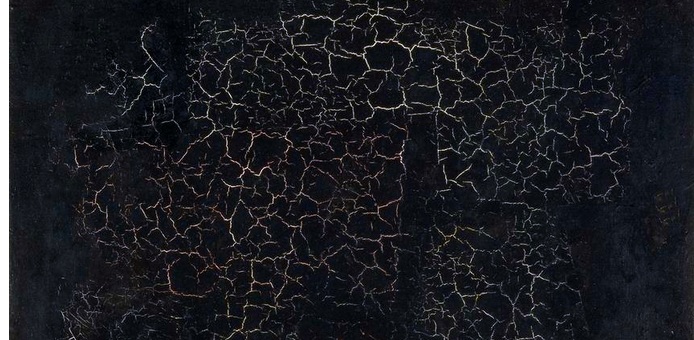
Uzbekistan is conducting a massive crackdown on the media
22.02.2026We offer you a partial and restructured translation of an article by Uzbek journalist Alexei Volosevich about the crackdown on the media and social networks in Uzbekistan, published on the Asiaterra.info website:
В Узбекистане идет массовая зачистка медиаполя
Since the beginning of this year, a campaign has been underway in Uzbekistan to eliminate the accounts and channels of journalists, bloggers, and civil activists on social networks and technology platforms (Facebook, YouTube, Instagram, Telegram), which is essentially an attempt to destroy the foundations of civil society. The basis for closure is complaints received from anonymous accounts or fake email addresses alleging copyright infringement, after which technology companies immediately delete these pages without verification or investigation and without the possibility of quick appeal, effectively siding with the authoritarian authorities of Uzbekistan.
At the same time, dozens, and possibly hundreds, of so-called internet trolls (bots) — anonymous internet commentators — became more active. Since 2026, they have been leaving numerous comments under articles published on social media, without even bothering to make them sound plausible. At the same time, comments that are usually intimidating in nature are left by representatives of the special services. They differ from bot comments in that they target a specific author, i.e., they demonstrate knowledge of their biography, family, colleagues, and what happened to them and in what year.
Blocking accounts and groups on social issues
Over the past three weeks, Uzbekistan has been experiencing a nightmare: almost every day, bots “close” the channels or accounts of journalists, bloggers, and activists, flooding Facebook, YouTube, and Telegram with a huge number of complaints. After that, tech corporations immediately close channels and profiles with tens and hundreds of thousands of subscribers.
This is not the first case of such removal of groups inconvenient for the Uzbek authorities: about a year ago, the group Uyat.uz, which actively opposed the illegal felling of trees and other green spaces, was destroyed in the same way, with the unofficial support of a number of high-ranking officials.
Tashkent residents recall that some time ago, the Facebook groups “Sergeli” and “Chilanzar” (districts of Tashkent) with a huge number of subscribers were removed, allegedly due to “public discontent.”
Tashkent-SNOS group on FACEBOOK
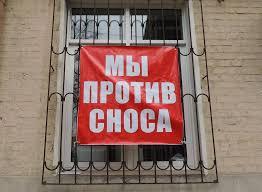 On February 16, based on an anonymous complaint, the Tashkent-SNOS group on Facebook, dedicated to demolitions, housing seizures, and illegal evictions of citizens, was deleted. The group had existed since 2017 and had about 32,000 subscribers.
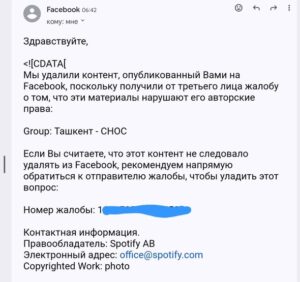
According to group administrator Farida Sharifullina, a letter from Facebook to her email revealed that someone named AB Spotify had filed a complaint about copyright infringement. The specific content that infringed on Spotify’s rights was not specified. Facebook suggested writing to Spotify and asking them to withdraw the complaint.
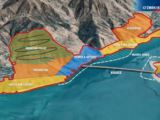
Sharifullina suggests that the deletion of the group may be linked to its active opposition to the Sea Breeze Uzbekistan project, promoted by President Shavkat Mirziyoyev and, in essence, representing the “privatization” by the latter’s family of the last coastline of the Charvak Reservoir, from which the capital of Uzbekistan receives drinking water, with the subsequent creation of an expensive resort there.
YouTube channel “Rinat Sagitov”
 On February 11, the YouTube channel “Rinat Sagitov” was blocked. It published “shorts” — speeches by citizens who disagreed with the ban on the use of cars older than 50 years, i.e., with the deprivation of their right to property. The channel had been operating since 2022, had posted about 200 videos, and had more than 11,500 subscribers. In recent days, due to its posts on the important topic of cars, it has become one of the fastest growing channels in Uzbekistan, gaining more than 1.2 million views daily.
The channel was shut down after it published a series of video messages from citizens requesting that the government’s decree banning old cars be revoked. The request for removal was submitted by a certain Shokir Rafikov (shokirrafikov13@gmail.com), author of the Telegram channel “Look_изнутри”.
Blogger Kamil Yenikeev’s Facebook and Instagram pages
 On February 18, it became known that the accounts of another activist, Tashkent resident Kamil Yenikeev, author of the “Zdarovaleykum” channel, had been blocked. According to him, two of his Instagram pages were deleted in the morning, and his Facebook account was blocked. The activist used his platforms exclusively to discuss socially significant issues and questions concerning the lives of ordinary citizens of Uzbekistan. He made videos on social topics.
He said that he regularly faced waves of complaints and aggressive comments. In his opinion, the attacks could have been organized.
During his time on the air, Yenikeev gathered an audience of more than 50,000 subscribers. Now that audience is gone. But, as he notes, it’s not just about the numbers. What is much more alarming is that Uzbekistan still lacks a transparent mechanism for protecting users, a clear response to organized cyberattacks, and normal dialogue between government agencies, journalists, and bloggers.
Urikguli
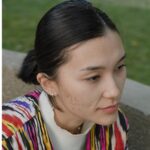
Mutabar Khushvaktova
On January 30-31, several media outlets and activists in Uzbekistan reported that Meta had shut down their Instagram pages, citing certain violations of the rules. The page of eco-activist Mutabar Khushvaktova (Urikguli), who raises environmental issues and opposes the construction of the Sea Breeze resort on the shore of the Charvak Reservoir near Tashkent, was found to be inaccessible. Her project Yashil uyim (“My Green Home”), which had about 100,000 followers, was also deleted.
Blocking media accounts
Hook Report, Sarpa Media
 The accounts of Tashkent-based publications Hook Report (and the associated account of editor-in-chief Yana Modelova) and Sarpa Media (more than 20,000 subscribers) were disabled. The reason given in all cases was a violation of “community standards regarding fraud and deception.” Hook Report founder Daria Solod said that what happened was a serious blow to the small publication and its financial stability. She suggested that it could have been a planned attack.
“At first, we thought it was related to propaganda material, but since Sarpa and Mutabar’s accounts have also been deleted, we think it’s about ecology and the Sea Breeze project. They didn’t just delete the related post, they deleted the entire account that was linked to the work account. I am incredibly angry at the hypocrisy of corporations that see nothing wrong with advertising and posts about drugs, but easily delete posts and accounts of independent media after complaints from bots”, Darina wrote. She later added: “Now we are sure that legs grow from Sea Breeze “…
 Sarpa Media suggested that the reason for the blocks was mass complaints, which may have been coordinated. They recalled that they had faced a similar situation in 2022, when tens of thousands of suspicious accounts subscribed to the page in a short period of time. Such actions require “significant resources — time, money, and technical capabilities,” the project said in a statement.
By the evening of January 31, the blocked pages had been restored.
Eltuz Telegram channels
 On January 29, the online publication Eltuz had two Telegram channels blocked and then deleted—one in Uzbek and one in Russian. The first had 155,000 subscribers, and the second had about 6,000. Telegram sent a notification that the channels were blocked “for publishing personal data without the consent of the owners.” The editorial office reported that this was preceded by the publication of materials criticizing the policies of the official Tashkent.
“This isn’t the first time something like this has happened. A year ago, they deleted our YouTube channel, which had 800,000 subscribers. We had 150,000 followers on Facebook, and they shut that down too. In total, we had about 1.5 million followers on social media. We attribute the blocking of our Telegram channel to the publication of critical material. They use hacks, mass complaints, and spam,” Eltuz told Azattyk Asia (a division of Radio Liberty).
Resources from the Oina (Mirror) project and journalist Qudrat Bobojonov
On February 18, three fictitious complaints of copyright infringement were filed against two YouTube channels belonging to the publication. The result: the channel “Qudrat Bobojon videologi” was blocked. A week ago, an attack consisting of seven complaints was repelled. At that time, YouTube temporarily blocked the channels of the cybercriminals themselves.
Last year, Uzbek journalist Kudrat Babajanov, who lives in Europe, lost three major channels (one of them with an audience of 730,000 subscribers). Previously, coordinated complaints led to the closure of the project’s Facebook and Telegram pages.
Removal of posts about detention of Alexey Volossevich
 A few days after brief detention of the prominent Uzbek journalist Alexey Volosevich (Asiaterra.info) while taking photographs at the market on February 1, which was not directly related to journalism, posts about this incident were removed from the Rassom Tuz Facebook page.
Someone contacted Facebook from a fake email address, volosevichaleksey@gmail.com, complaining that the page was allegedly using intellectual content belonging to me illegally, and both posts were deleted.
Blocking of political figures
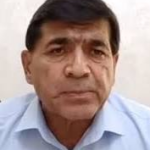 In January, the YouTube channel of Professor Khidirnazar Allakulov, founder of the opposition party “Haqiqat, taraqqiyot va birdamlik” (Truth, Development and Unity), was removed. For several years, the Uzbek authorities have refused to register the party and have persecuted him and his fellow party members.
“This is the sixth time I have launched a new YouTube channel. In 2021, 2022, 2023, and 2024, they managed to shut down my channels by filing copyright infringement complaints. The fifth closure happened on January 6 this year. The authorities are afraid of debate, so instead they intimidate, persecute, and torture [journalists and bloggers]. Or they deliberately delete their accounts and channels on social media,” Allakulov said.
Blocking of human rights organizations
On January 23, YouTube removed the channel of AHRCA.ORG, the France-based Association for Human Rights in Central Asia (AHRCA), after three notices of alleged copyright infringement. This was reported by the head of AHRCA, Nadezhda Ataeva. According to her, the video materials consisted of journalistic and human rights publications, including interviews, quotations from public statements, and analytical commentary on issues of significant public interest. The content was non-commercial in nature and was used solely for the purpose of informing the public about the human rights situation in Central Asian countries, including for the purpose of documenting serious violations.
The copyright infringement notices were filed by individuals and small accounts that are not recognized rights holders or professional media organizations. Two of the individuals named as complainants have already confirmed that they did not file any complaints against this organization and have no claims against it.
“As a result of the removal of the AHRCA.ORG channel, our organization has temporarily lost one of its key tools for disseminating socially significant information. The channel hosted unique archival materials, including interviews with human rights defenders and experts (including those who have already passed away), as well as documented evidence of torture and other gross human rights violations in Central Asian countries. Restricting access to such materials undermines society’s right to information and efforts to preserve human rights memory,” Ataeva wrote.
She pointed out that the removal of the AHRCA.ORG channel occurred during a period of heightened public attention to the program “Mirziyoyev’s daughter striving for power? How Uzbekistan became a toy of an authoritarian ‘princess’?” prepared by the Kazakhstani project AIRAN, which was broadcast on December 30, 2025.
Currently, AHRCA is seeking to restore the deleted channel: DMCA counter-notifications have been filed, and appeals have been sent to international organizations involved in protecting freedom of speech and independent journalism.
On February 17, Nadezhda Ataeva reported that she had received a notification from Facebook about a complaint that had been filed and the start of the procedure to delete her personal page. The formal reason given was “copyright infringement” with reference to a 2022 publication about the arrest of human rights activist Aziz Yusupov. This refers to a human rights statement posted on the official website of the Association “Human Rights in Central Asia.”
The publication was reproduced with attribution and for non-commercial purposes to inform the public about the human rights situation. In this regard, the accusation of copyright infringement appears unfounded. I have serious reasons to believe that we are facing the deliberate use of copyright protection mechanisms to restrict the dissemination of human rights information and freedom of expression,” she wrote.
What is blocked and deleted
Journalists note that it is not anonymous provocative resources or accounts engaged in outright fraud that are blocked, but rather platforms dedicated to specific topics that are painful for society—ecology, illegal seizures of housing and public spaces, the rights of shareholders and motorists, the quality of the urban environment—in other words, those who raise acute social issues.
In fact, all opposition and anti-corruption activity is being removed, as Internet users have long since stopped visiting websites directly and now read pages from publications on social networks and messengers. These have also proved vulnerable.
At the same time, cyberattacks have not stopped; they are still ongoing, and it appears that new channels and pages will be removed in the near future.
Many people say that the cyberattacks started a few months after the September meeting between the presidents of Uzbekistan and the US in New York, after which, on November 7, the US president announced Shavkat Mirziyoyev’s intention to withdraw $135 billion from Uzbekistan to invest it in the US economy. And shortly after Uzbekistan joined Trump’s “Council of Peace.” That is, after acquiring a powerful overseas patron, the need for any kind of politeness apparently disappeared.
By Farida Sharifullina
'/%3E%3C/svg%3E)

